Rangers and Celtic must strip away fans from their derbies to stop the Old Firm rivalry turning fatal, argues Hugh Keevins after an independent review exposed two potentially life-threatening incidents at Ibrox last March. The season-ending riot at the Rangers ground left the Scottish Football Association with a stark choice: act now or risk a tragedy that could overshadow the fixture forever. League standing (final 2025 table - new season not yet under way): 2nd in Premiership, 69 pts, 19W-12D-2L from 33 games, recent form WLLLL.
Why the Ibrox riot demands drastic action
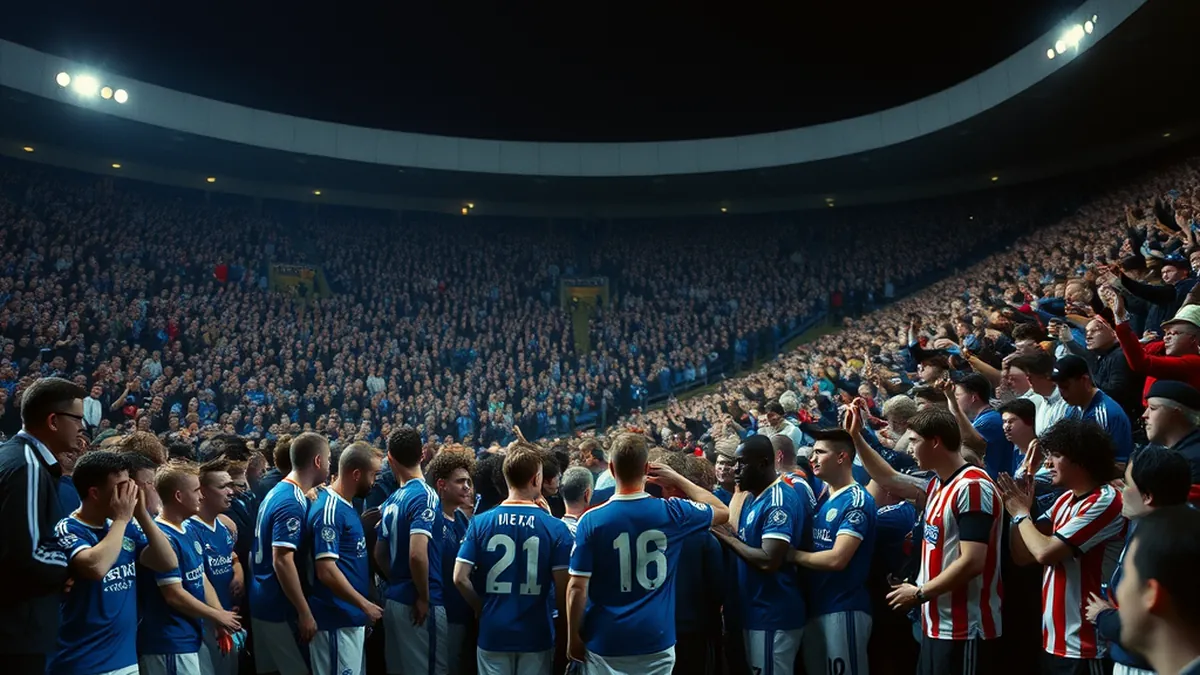
The report into the chaos at Ibrox on a fateful day in March brands sections of the support as behaving like serious crime groups. Mark Blackbourne, the review’s lead author, warns the derby is drifting toward a fatality if nothing changes. Keevins writes that the poisonous relationship between the sets of fans is a bitterness without end, fuelled by pathological detestation rather than passion. Anti-social behaviour, sectarian chanting and missile-throwing have been a fixture of Old Firm weekends for over a century, with the 1971 Scottish Cup Final riot still cited as the moment that forced government legislation removing alcohol from Scottish football grounds.
What the report actually found
The review catalogues two potentially life-threatening situations at Ibrox that afternoon. It describes the entire afternoon as an exercise in lawlessness, with no sign of the decency required to restore the fixture to its once-glorious status. Keevins argues that the only way to remove the opportunity for attack is to separate the sets of fans entirely. If they cannot see or hear each other, guilt for any disorder is established beyond reasonable doubt, he insists.
The proposed solution: grounds to themselves, points at stake
Keevins proposes Rangers’ Ibrox and Celtic Park become exclusively home venues when the clubs meet in league or cup. Any sectarian singing or public disorder would then carry automatic sanctions. Ground closures, points deductions and nets to block missiles are floated as the minimum response when the clubs appear before the SFA on August 13. The governing body is expected to impose measures tough enough to shift the risk-reward balance for the worst elements in both sets of support.
How the clubs could respond - and what happens next
Rangers and Celtic have spent decades insisting the derby is the greatest in the world, yet the fixture now carries a reputational cost that dwarfs any sporting damage. The clubs’ leadership must decide whether to accept radical measures or watch the fixture’s future slip further toward infamy. With the next derby scheduled for October 28 at Heart Of Midlothian’s ground, the window to act is closing fast. The SFA hearing on August 13 will set the tone for every Old Firm fixture that follows.